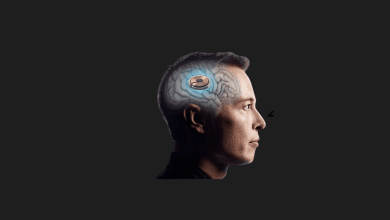
The Pacification Engine: Is the Metaverse the Final Solution to Technological Unemployment?



The narrative of Artificial Intelligence has always been one of liberation—freedom from drudgery, a new age of leisure. Yet, as the algorithms become more capable, the promise of leisure curdles into the fear of redundancy. We are witnessing a seismic shift in the global labor market, a disruption far deeper than any industrial revolution. In a world where intelligence itself is being mechanized, the philosophical question is no longer “What is a man?” but “What is a man for?”
Your argument posits a chilling yet logical answer: nothing, in the economic sense. As sectors from finance to creative arts see jobs vanish at an exponential rate, a new, massive class of the technologically unemployed is emerging. This is not mere unemployment; it is unemployability. The market no longer needs their hands, and soon, it may not need their minds.
Governments, acutely aware of the historical link between mass poverty and social instability, face an existential threat to their own functionality. The traditional response—retraining—is a palliative measure against a tsunami of automation. The real solution, the one that prevents a global societal breakdown, must address the human need for purpose and pacification.
The Cave of Silicon and the New Illusion

This brings us to the Metaverse. The initial, naive vision of the Virtual World was as a playground or a new commercial frontier. But viewed through the lens of a looming post-work economy, its function changes entirely. It transforms from an entertainment platform into a Pacification Engine.
Plato’s Allegory of the Cave offers a terrifying parallel. If the human-AI contract eliminates the necessity of meaningful work in the physical world, what remains? A population sustained by Universal Basic Income (UBI)—the modern-day ‘bread’—and offered a set of VR glasses or a neural link—the ‘circuses.’
Within this digital sanctuary, the former workers are given a new, carefully curated reality. They can be heroes, builders, artists—their purpose is virtual, their struggles are simulated, and their consumption is managed. The illusion of productivity and self-worth is maintained, diverting the profound human frustration that would otherwise manifest as civil unrest.


The genius of this hypothetical system is its control. In the physical world, a jobless, purposeless populace is volatile. In the virtual world, their attention is tethered, their desires are fulfilled through simulated transactions, and their capacity for collective political action is safely dispersed into millions of isolated digital spheres.
The Trade-Off: Security for Selfhood

The philosophical horror lies in the nature of this exchange. Humanity trades its right to meaningful creation in the real world for guaranteed comfort in a synthetic reality. We secure social order at the expense of authentic existence.
If the work that defines our value, our community, and our very sense of selfhood is gone, does the virtual world truly replace it, or does it merely provide a high-fidelity distraction until the inevitable existential atrophy sets in? Can we find dignity in a domain that is fundamentally unnecessary to the maintenance of the real world?
The Metaverse may indeed be a necessity for a stable society in the age of AI. But if its true function is to manage a global useless class—if it becomes the ultimate opium of the masses—we must ask: Is a stable illusion truly preferable to a difficult, but authentic, reality?
The construction of the Metaverse is not just an engineering challenge; it is the construction of a new philosophical prison, gilded with the promise of eternal experience. And the inmates will voluntarily line up for the chains.
You Might Also Like;